

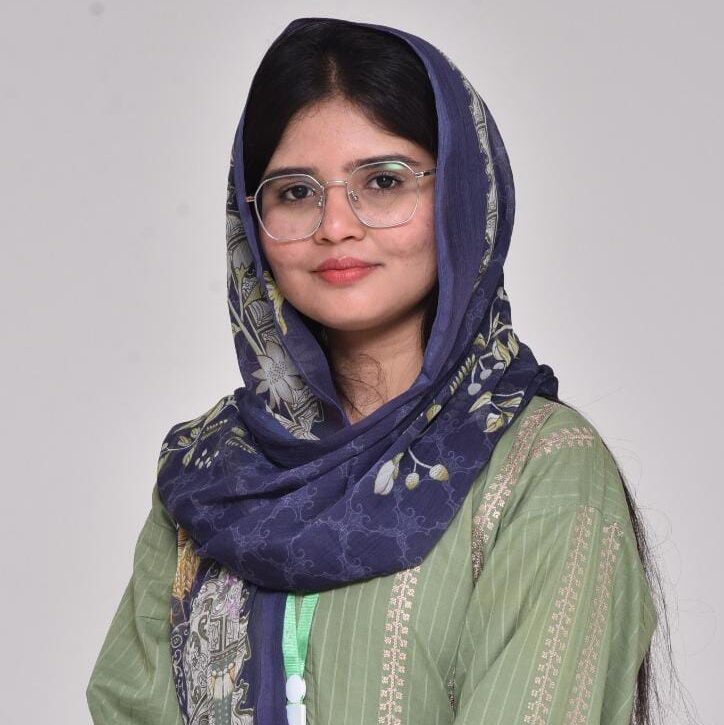
My Life rules
.1
Heal with Heart, Not Just Hands
.2
Movement is Medicine
.3
Heal with Heart, Not Just Hands
.4
Balance Science with Compassion
Small steps that shaped a healer’s journey.
With my early education rooted in the rural areas of Sindh, I grew up with a quiet strength that shaped my dreams. Despite limited resources, I nurtured a powerful desire to become independent, building self-confidence, self-worth, and a vision far bigger than my surroundings. My journey is a reminder that greatness often rises from the simplest beginnings, and that determination can turn any path into a purpose.

Early Education
I completed her early education with limited resources, but my vision was never small. Even in challenging circumstances, I aspired to become someone inspirational—someone my younger self could look up to. With unwavering dedication, I turned her mother’s dream into reality and became a doctor. My story proves that when passion meets perseverance, even the humblest beginnings can lead to extraordinary achievements.
Doctor of Physical Therapy – People’s University of Medical & Health Sciences for Women (PUMHSW), Nawabshah
At PUMHSW, I devoted myself fully to hard work and self-belief. I spent countless days and nights mastering medical terminologies, practicing every skill I learned, and pushing myself beyond every limit. My dedication turned challenges into stepping stones, shaping her into a confident, capable, and compassionate professional.
MS in Physiotherapy – Times University, Multan
I completed her MS in Physiotherapy with the same dedication that guided her from the very beginning, and she proudly serves as a lecturer at Ziauddin University, Sukkur. Through my hard work and resilience, I not only built a successful career but also fulfilled my mother’s dream of becoming a confident, independent woman. My journey stands as a powerful example of how determination can transform dreams into reality.
From Student to Educator: Anatomy Lecturer at Ziauddin University- Sukkur
I began my career as an Anatomy lecturer—ironically, the very subject I disliked the most during my bachelor’s. Yet life has its own way of surprising us. The subject that once felt difficult soon became my passion, my strength, and eventually my bread and butter. With time, I fell in love with every bone, every muscle, and every structure that makes the human body remarkable. As the year coordinator for new batches, I became the go-to person for students, whether they struggled academically or needed personal guidance. Being known as the teacher who always had a solution became the most rewarding part of my journey.
Miss Sain always explained anatomy in a way that finally made sense. Her support and patience helped me overcome my fear of the subject
Ekta Khurana
4th Year – DPT Student at Ziauddin University
She wasn’t just our lecturer—she was our mentor. From academic confusion to personal struggles, she always had a solution.
Imran Ali
3rd Year – DPT Student at Ziauddin University
As our year coordinator, she made every student feel heard and valued. Her guidance shaped not just our studies, but our confidence.
Kanwal Hanif
1st Year – DPT Student at Ziauddin University
Contributing Research That Shapes Tomorrow’s Healthcare – Research Publications
My research journey reflects my commitment to advancing healthcare and physiotherapy practice. I have contributed to studies exploring how leadership styles influence clinic performance, examined physiotherapists’ attitudes toward individuals with disabilities, and investigated the impact of work environments on neck pain in adults. Through these publications, I strive to bring meaningful, evidence-based insights to the field and support both academic growth and clinical excellence.

Impact of leadership styles on physical therapy clinic performance: The mediating role of employee engagement and the moderating effect of organizational culture
Attitude of physiotherapists toward disabled persons.
Impact of Work Environment on Neck Pain in Adult Population.
Deep insights into my Publications
My publications represent more than academic work—they reflect my dedication to understanding the complex realities of healthcare, leadership, and human wellbeing. Each study I’ve contributed to has given me deeper insight into how physiotherapy intersects with organizational behavior, social attitudes, and real-world patient challenges. From examining how leadership styles impact clinic performance, to understanding physiotherapists’ perceptions of disability, to exploring how workplace environments contribute to neck pain—I’ve aimed to highlight gaps, ask meaningful questions, and offer evidence that can genuinely improve practice. These research experiences have shaped me not only as a clinician and educator, but as someone committed to advancing the future of healthcare through thoughtful, impactful inquiry.
Bulletin of Business and Economics, 13(2).
Title: Impact of leadership styles on physical therapy clinic performance: The mediating role of employee engagement and the moderating effect of organizational culture
This research explores how different leadership styles directly influence the performance of physical therapy clinics, revealing that effective leadership goes far beyond managing tasks—it shapes the entire workplace environment. The study highlights that employee engagement plays a crucial mediating role, meaning motivated and involved staff significantly enhance clinic performance. Additionally, organizational culture acts as a powerful moderator, strengthening or weakening the impact of leadership. The insights show that when strong leadership, engaged employees, and a positive culture align, physical therapy clinics achieve higher efficiency, better patient outcomes, and overall improved performance.